Construction Pathology, Rehabilitation Technology and Heritage Management
Organized by:
Keynote Speaker
Prof. Hugo Rodrigues
University of Aveiro, Portugal
Brief curriculum vitae
Hugo Rodrigues is Associate Professor at University of Aveiro, within the Department of Civil Engineering, since 2020.
He is the Director of the Master in Master in Built Heritage Conservation, where he carries out his activities as lecturer, researcher and consultant.
His experience in Seismic analysis, having coordinated and participated in research and applied research projects and also in specialized consultancy studies ordered by several public institutions and companies regarding the assessment of seismic risk.
Over the last decade, he has been researching the field of Building Rehabilitation, Structural Health Monitoring, and Seismic Safety, including experimental and numerical activities.
He is the Coordinator of the College of Civil Engineering from Central Regional the of the Portuguese Engineers Association
Plenary session
Characterization of historical construction: the development of digital tools to preserve cultural heritage – Application on the Batalha Monastery
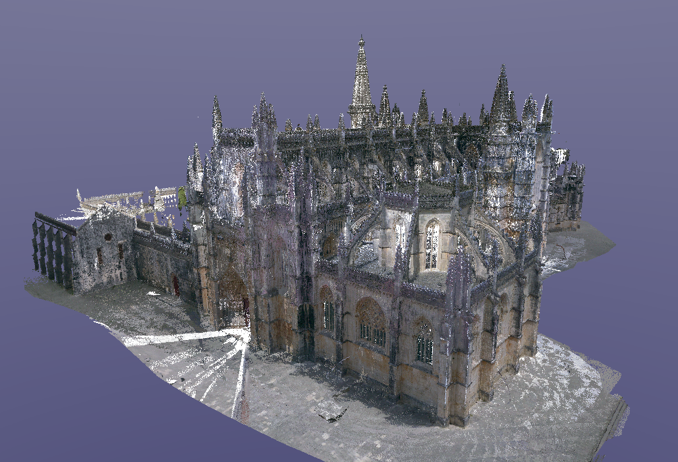
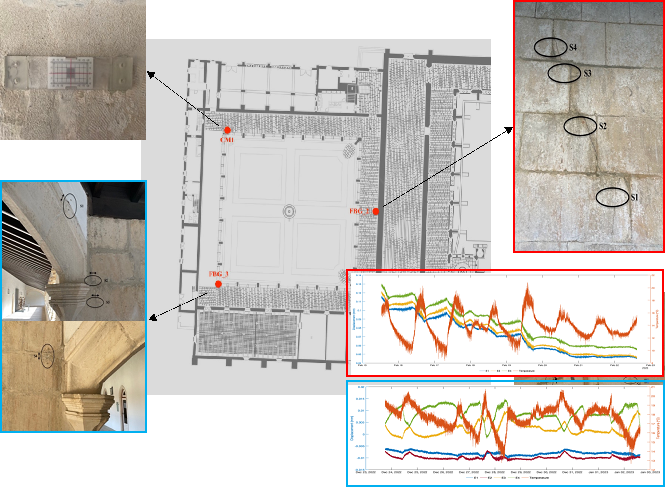
The development of adequate analyses for monuments and historical structures represents an important task, not only to verify their structural behavior, but also to understand the observed damages, estimate their performance deterioration, and, if needed, properly design effective repair interventions. The analysis of historical structures is challenging and requires the use of complex numerical models in terms of geometry, material properties, and accurate damage representation, depending on the current state of the structure. This work focuses on the Monastery of Batalha as a case study and shows the framework developed to represent the monument globally, including the results from several non-destructive techniques for the characterization and monitoring of the building, damage classification through the development of an innovative inspection method based on image acquisition, and implementation of an SHM system based on different sensing techniques. A first approach regarding the SHM system was the implementation of fiber optic sensors, namely the Fiber Bragg gratings (FBG) solution, which allows the monitoring of several parameters of the structures with high accuracy and minimal intrusion. The FBG sensors rely on the analysis of the reflected optical spectrum by the Bragg gratings, so as the fiber conditions (temperature, length, pressure, etc.) change, there is a proportional spectral shift in the reflected Bragg wavelength. The numerical models are paired with an SHM system implemented in the monastery to update the model, allowing the development of a live digital twin. Finally, solutions for the recovery of lost or damaged elements are presented, using digital technologies for the collection of volumetric and dimensional information, specifically developed for the recovery and conservation of the built elements.